
Reviewed · FRENCH RIVIERA TOURS
Entrance ticket to the Escoffier Culinary Art Museum
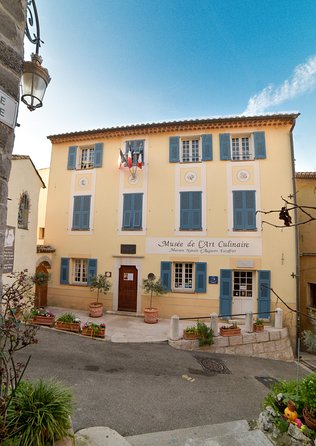
The most interesting thing here is the setting: you walk through the 18th-century Provençal house where Auguste Escoffier was born, not a modern museum built around a famous name. Inside, ten rooms trace French culinary art through his personal objects, old kitchen furniture, menus, and eye-catching sugar and chocolate sculptures. I like the compact size and the unusually personal feel. The main caution is that the visit lasts only about 45 minutes, so it suits a short stop more than a full afternoon outing.
I also like the low $8.47 admission price and the easy mobile ticket. The museum is in Villeneuve-Loubet, near public transportation, and the staff have earned strong praise for keeping the place in excellent order and being friendly. You will need to plan around the one-hour lunch closure, and the audioguide is not included.
In This Review
- Key points to know before you go
- Meeting Auguste Escoffier in Villeneuve-Loubet
- What the ten rooms contain
- Inside the 18th-century Provençal house
- Why the menus and old kitchen furniture matter
- Sugar and chocolate displays bring color to the visit
- How long to allow and when to arrive
- Is $8.47 good value?
- Getting there and handling the practical details
- Who will enjoy this museum most
- Should you book the Escoffier Culinary Art Museum?
- FAQ
- Where is the Escoffier Culinary Art Museum?
- What is the museum housed in?
- How long does the museum visit take?
- How much does admission cost?
- What does the ticket include?
- Is an audioguide included?
- What are the museum’s opening hours?
- Is the museum open during the lunch hour?
- Is the museum closed at any time during the year?
- Can I cancel for a full refund?
Key points to know before you go
- Birthplace setting: The museum occupies Escoffier’s original home in the village of Villeneuve-Loubet.
- Ten rooms in 300 square meters: The visit is compact, focused, and manageable within about 45 minutes.
- More than cookware: Expect personal belongings, period kitchen furniture, menus, and elaborate sugar and chocolate works.
- A good-value short stop: At $8.47 per person, admission is modest for a museum devoted to one of France’s most important chefs.
- Split opening hours: The museum opens from 10:00 AM to 1:00 PM and from 2:00 PM to 6:00 PM.
- Audioguide costs extra: Your entrance ticket includes museum admission only, not an audioguide rental.
Meeting Auguste Escoffier in Villeneuve-Loubet
Auguste Escoffier is widely regarded as one of the great figures in French gastronomy. This museum gives you a chance to meet him through the rooms he once occupied, rather than through a distant collection of restaurant memorabilia.
That difference matters. A birthplace museum can make a famous person feel more understandable. The house gives the visit a domestic scale, while the displays explain how Escoffier’s ideas helped shape chefs of his time and the generations that followed.
You are not signing up for a cooking class or a food tasting. This is a self-guided museum visit centered on objects, rooms, and culinary displays. If you want to taste local specialties, you will need to make separate plans in Villeneuve-Loubet or elsewhere along the French Riviera.
The museum presents Escoffier as a humanist, inventor, and forward-looking chef. Those labels are useful because they point beyond recipes. The visit is about how cooking became an organized art and profession, and how one chef’s work still influences French gastronomy.
A few more French Riviera trips worth weighing up
- Nice: Allianz Stadium and National Sports Museum Tour
★ 4.5 · 301 reviews - Antibes: Picasso Museum Drawing Tour Led by Local Artist
★ 5.0 · 39 reviews - Visit Marc Chagall Museum
★ 5.0 · 28 reviews
What the ten rooms contain
The museum spreads its collection across ten exhibition rooms and roughly 300 square meters. That is a small footprint, which helps keep the visit clear and focused.
I like this size for a busy Riviera itinerary. You can see the museum without sacrificing half a day, yet there is enough variety to prevent it from feeling like a single-room tribute. Plan on around 45 minutes, though your pace may be quicker or slower depending on how closely you examine the displays.
The collection mixes several kinds of material:
- Personal objects connected with Escoffier
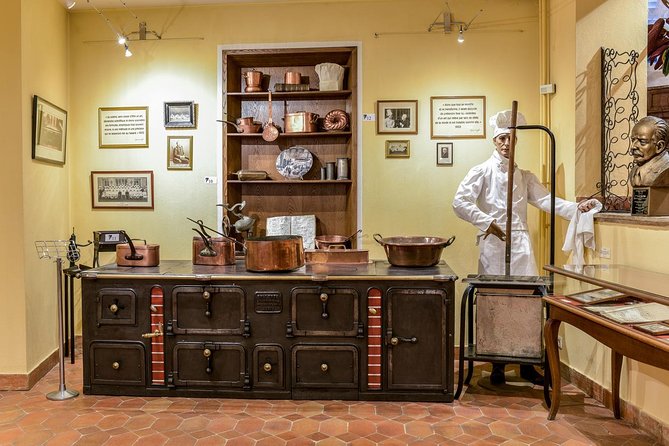
- Kitchen furniture from an earlier era
- Large collections of menus
- Sugar sculptures
- Chocolate sculptures
- Temporary exhibitions devoted to a different theme each year
This range gives the museum more balance than a display made up only of portraits and written panels. The personal items bring Escoffier closer to you. The period kitchen furniture shows the tools and working environment associated with older culinary practice. The menus offer a direct look at how meals were presented and recorded.
The sugar and chocolate sculptures provide the visual highlight. They also show that culinary art is not limited to what arrives on a plate. Decoration, presentation, precision, and craftsmanship all have a place here.
Inside the 18th-century Provençal house
The building is one of the strongest reasons to visit. The museum occupies an 18th-century Provençal home in the heart of Villeneuve-Loubet, and several rooms are connected with Escoffier’s own life.
You will notice the contrast between the modest domestic setting and the international importance of the chef. That contrast gives the museum its character. Escoffier’s name belongs to the great story of French gastronomy, but the visit begins in an ordinary village house.
The setting also makes the museum feel tied to place. You are not simply looking at culinary objects in a neutral gallery. You are visiting the village connected with Escoffier’s early life and seeing the rooms that once belonged to him.
Because the museum is housed in an older building, this is not the kind of attraction designed around broad modern galleries and large crowds. The visit is more intimate and room by room. You should expect a traditional museum atmosphere rather than a high-tech attraction.
That can be a strength if you enjoy historic interiors and personal collections. It may feel less satisfying if you want demonstrations, tastings, or interactive cooking activities. The admission ticket covers entry only.
Why the menus and old kitchen furniture matter
Menus can seem like minor paper objects until you consider what they reveal. They show how chefs organized meals, described dishes, and presented food to diners. In a museum about Escoffier, the menu collection helps connect culinary creativity with the structure of professional dining.
The old kitchen furniture adds another layer. Modern kitchens hide much of their work behind sleek equipment and efficient layouts. Earlier kitchen furniture makes the working side of cooking easier to picture and gives the collection a practical foundation.
I find this combination especially useful for people who know Escoffier mainly as a name. You can move from the chef’s personal world to the tools and customs of the kitchen, then to the formal presentation of meals through the menus.
The museum does not need a large number of objects to make that point. Its compact rooms let you shift between personal, practical, and decorative material without walking long distances or losing the thread.
A different stretch of the coast on the same trip:
- Excursions Palmée excursion discovered of Estérel and its islands!
★ 5.0 · 219 reviews - Exclusive Food Tour in Menton – 3 hours – small groups
★ 5.0 · 111 reviews - Parasailing flight two people, in Mandelieu-Cannes
★ 5.0 · 47 reviews - 4×4 tour in a winery followed by a tasting
★ 5.0 · 46 reviews
Sugar and chocolate displays bring color to the visit
The sugar and chocolate sculptures are among the most distinctive parts of the museum. They offer a visual change from furniture, menus, and personal objects, and they remind you that professional cooking can involve detailed sculpture as well as flavor.
These works are also helpful if you are visiting with someone who is less interested in culinary history. The displays give the museum a strong visual element, and they make the visit appealing to people who enjoy food presentation, confectionery, and craft.
The exact displays can change, since the museum presents a temporary exhibition each year around a particular theme. That means a return visit may not be identical to an earlier one, although the permanent collection remains the core of the experience.
Do not expect the admission ticket to include a tasting. The information provided for this experience covers entrance to the museum only. The focus is on seeing and learning, not eating.
How long to allow and when to arrive
The stated visit time is about 45 minutes. I would treat that as a useful planning guide rather than a strict limit.
A quick visit can fit neatly into a morning or afternoon in Villeneuve-Loubet. If you pause over the personal objects, menus, and sculptures, you may want a little more time. Since the museum has only 300 square meters of exhibition space, it is unlikely to consume an entire day.
Opening hours are split into two periods:
- 10:00 AM to 1:00 PM
- 2:00 PM to 6:00 PM
The one-hour closure from 1:00 PM to 2:00 PM is the main timing issue. If you arrive near lunch, check the clock carefully. A late morning visit may work well before lunch, while an afternoon visit should begin after 2:00 PM.
The museum is open Monday through Sunday during the stated operating period, which gives you flexibility on a Riviera trip. The annual closure runs from December 1, 2025 through January 8, 2026, inclusive. If your visit falls during that period, you will need another plan.
Is $8.47 good value?
At $8.47 per person, this is an inexpensive museum visit by French Riviera standards. The value comes from the combination of a historic birthplace, a focused collection, and a short duration that fits easily into a larger day.
You are paying for a specialized museum rather than a major palace or full-day cultural attraction. That distinction helps set expectations. The ticket is a good buy if you are interested in French food, culinary traditions, historic kitchens, or Escoffier himself.
The price also works well for families and mixed-interest groups. Someone who is deeply interested in gastronomy can take time with the displays, while others can complete the visit in under an hour without feeling trapped in a long program.
The value is weaker if you expect a meal, food samples, a chef-led talk, or hands-on activity. None of those are included. You receive museum admission, and the audioguide requires an additional rental charge.
For a short cultural stop, I consider the price fair. It is low enough to make curiosity worthwhile, even if you are still deciding how much you care about culinary history.
Getting there and handling the practical details
The museum is near public transportation, so you do not need to treat it as an isolated attraction. The location in Villeneuve-Loubet also makes it useful for people already exploring the French Riviera rather than only those making a special pilgrimage for Escoffier.
A mobile ticket keeps entry simple. Your confirmation is provided at the time of booking, and the ticket covers admission to the museum.
The stated fitness requirement is moderate physical fitness. No detailed accessibility information is provided, so you should contact the museum directly if you need specific information about steps, surfaces, seating, or access inside the older house.
The experience provider is the Musée Escoffier de l’Art Culinaire itself. No guide name is supplied, and this should be treated as an entrance visit rather than a named guided tour.
The museum receives a 4.9 rating from 298 reviews, with 100 percent of the listed audience recommending it. The strongest praise centers on the museum being well maintained and the staff being friendly. That matters at a small museum, where a warm welcome and clear presentation can shape the entire visit.
Who will enjoy this museum most
I would recommend this experience first to people who have an interest in French gastronomy or Auguste Escoffier. It is also a good choice for anyone who enjoys historic houses, household objects, menus, and decorative food arts.
Food professionals and serious home cooks may find the subject especially rewarding. The collection connects a major chef with the physical world of kitchens and dining rooms, rather than treating him as only a name in a textbook.
Families can also make good use of the short format. The sculptures may hold a child’s attention better than written displays alone, and the 45-minute length is manageable.
This is less suitable if your ideal food experience means a market tour, tasting, cooking lesson, or restaurant meal. It is also not the best pick for someone seeking a large, interactive museum with films and demonstrations.
For most people, the museum works best as one stop in a day around Villeneuve-Loubet. Its compact size leaves time for other sights, while the subject gives your Riviera itinerary a welcome connection to French culture beyond beaches and scenery.
Should you book the Escoffier Culinary Art Museum?
You should book if you want a focused look at the birthplace and legacy of one of France’s most important chefs. The historic house, ten rooms, menu collection, and sugar and chocolate sculptures give you more variety than the short visit time suggests.
I would especially choose it when the $8.47 price fits your budget and you already plan to be near Villeneuve-Loubet. The museum is easy to slot into a morning or afternoon, and the mobile ticket removes much of the fuss.
Skip it if you want food to be served, tasted, or prepared in front of you. Also check the opening hours carefully, avoid the 1:00 PM to 2:00 PM closure, and remember the annual shutdown from December 1, 2025 to January 8, 2026.
Free cancellation is available if you cancel at least 24 hours before the experience start time. Changes or cancellations made within 24 hours are not accepted for a refund.
FAQ
Where is the Escoffier Culinary Art Museum?
The museum is in the heart of Villeneuve-Loubet on the French Riviera in France.
What is the museum housed in?
It is housed in the 18th-century Provençal house where Auguste Escoffier was born.
How long does the museum visit take?
The approximate duration is 45 minutes.
How much does admission cost?
The listed price is $8.47 per person.
What does the ticket include?
The ticket includes entrance to the Musée Escoffier de l’Art Culinaire.
Is an audioguide included?
No. Audioguide rental is not included in the admission ticket.
What are the museum’s opening hours?
The museum is open Monday through Sunday from 10:00 AM to 1:00 PM and from 2:00 PM to 6:00 PM.
Is the museum open during the lunch hour?
No. It closes from 1:00 PM to 2:00 PM each day.
Is the museum closed at any time during the year?
Yes. The annual closure runs from December 1, 2025 through January 8, 2026, inclusive.
Can I cancel for a full refund?
Yes, if you cancel at least 24 hours before the experience start time. Cancellations made less than 24 hours in advance are not refunded.
Just added around French Riviera
- Private Tour from Monaco★ 5.0 · 3 reviews
- Menton: Private Photoshoot with a Professional Photographer★ 5.0 · 4 reviews
- Menton Photo shoot with a Local Award Winning Photographer★ 5.0 · 8 reviews
- Exclusive cruise, swimming, Saint Jean Cap Ferrat, Nice, Eze★ 5.0 · 10 reviews
- Session of 30 minutes of Unique Sensations in Underwater Scooter★ 5.0 · 16 reviews
- Private full-day boat trip to Porquerolles★ 5.0 · 17 reviews
- Sunset trip kayak tour in the gulf of Saint-Tropez★ 4.9 · 20 reviews
- French Riviera Sunset Cruise – New Excursion for 2024!★ 5.0 · 20 reviews
French Riviera Tours, compared.

Excursions Palmée excursion discovered of Estérel and its islands!
Read our review →
Exclusive Food Tour in Menton – 3 hours – small groups
Read our review →
Parasailing flight two people, in Mandelieu-Cannes
Read our review →


Private Luxury Boat Tour of the Beautiful Riviera Nice / Monaco
Read our review →
Browse the lists this tour appears in