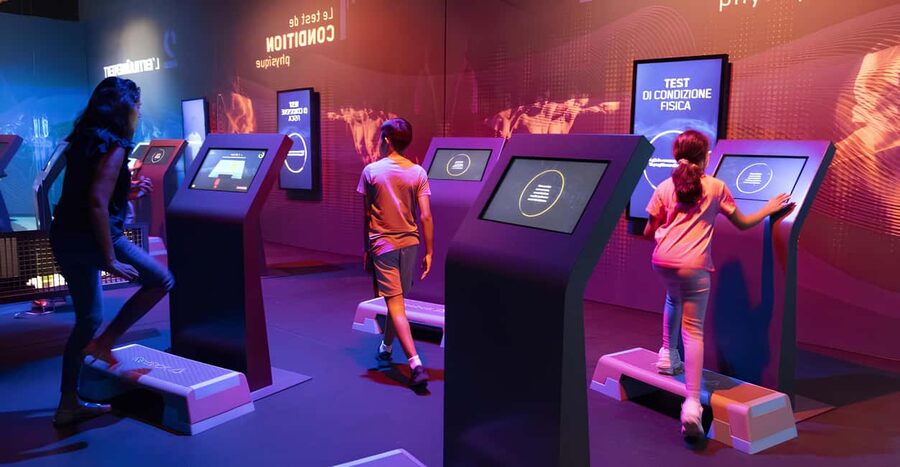
Reviewed · NICE TOURS
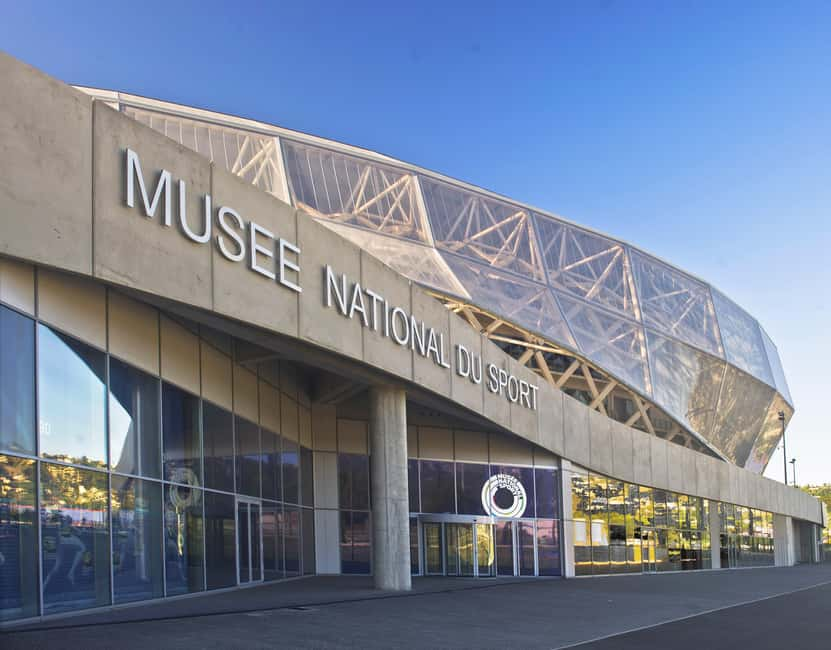
Ticket to Musée National du Sport
The most striking part of the Musée National du Sport is its sweep: all the Olympic torches are gathered here, alongside objects from athletics, cycling, boxing, football, rugby, skiing, sailing, and more. The museum treats sport as part of everyday society, not just a parade of famous scores and medals.
I like two things right away. First, you can move at your own speed rather than being tied to a guide. Second, the four-part layout gives the visit a clear shape, from personal effort to team competition and feats that push beyond normal limits. The main consideration is that the museum may feel more thoughtful than thrilling if you want a stadium visit or a short, high-energy attraction.
In This Review
- Key points to know
- A museum built around the idea of challenge
- From football and rugby to shared victory
- Seeing every Olympic torch
- A self-guided visit with room to set your own pace
- Temporary exhibitions add a second layer
- Is $9 good value?
- Families, access, and small practical rules
- What can disappoint you
- Who should book this museum?
- Should you book the Musée National du Sport?
- FAQ
- How much does admission to the Musée National du Sport cost?
- How long is the ticket valid?
- Is the visit guided?
- Can I explore the museum at my own pace?
- What are the main sections of the museum?
- Can I see Olympic torches?
- Are temporary exhibitions included?
- Is the museum wheelchair accessible?
- Who can enter free of charge?
- Can I bring food or drinks inside?
Key points to know
- All the Olympic torches in one place: A rare chance to see how the torch has changed across the Olympic Games.
- Four clear sporting challenges: Follow sections on individual achievement, head-to-head contests, team play, and extreme adventure.
- Interactive and family-friendly displays: The presentation is designed to engage children as well as adults.
- Self-guided freedom: You can stay as long as you like during the one-day admission and set your own pace.
- Good value at about $9: Adults can spend roughly two hours here without paying for a guide, while several groups qualify for free admission.
- Wheelchair accessible: The museum is suitable for people with limited mobility, according to the available activity information.
A museum built around the idea of challenge
The Musée National du Sport presents sport through one simple question: what does it take to overcome a challenge? That idea guides the visit and keeps the collection from becoming a random pile of jerseys, equipment, and photographs.
You begin with personal challenge, where the focus is on sports such as athletics, cycling, swimming, skiing, and riding. These activities put the body and the individual effort at center stage. You can think about speed, balance, stamina, and technique rather than only the final result.
This section should work well for families because children can connect physical actions with familiar sports. It also gives non-sports fans a useful entry point. You do not need to know the names of famous athletes to understand the basic struggle: run faster, jump farther, stay upright, reach the finish.
The museum then moves to one-on-one challenge. Boxing, tennis, martial arts, and fencing show sport as a direct contest between two people. Here, timing and reading an opponent matter as much as strength.
That shift is important. The collection is not only about athletic bodies. It also explores rules, discipline, tactics, and the tension created when two people face each other. If you enjoy seeing how sports differ in their use of space and equipment, this part gives you plenty to compare.
A few more Nice trips worth weighing up
- Nice to St Tropez Ferry Ticket and Cruise
★ 4.0 · 320 reviews - Entrance ticket to the Escoffier Culinary Art Museum
★ 5.0 · 298 reviews
From football and rugby to shared victory
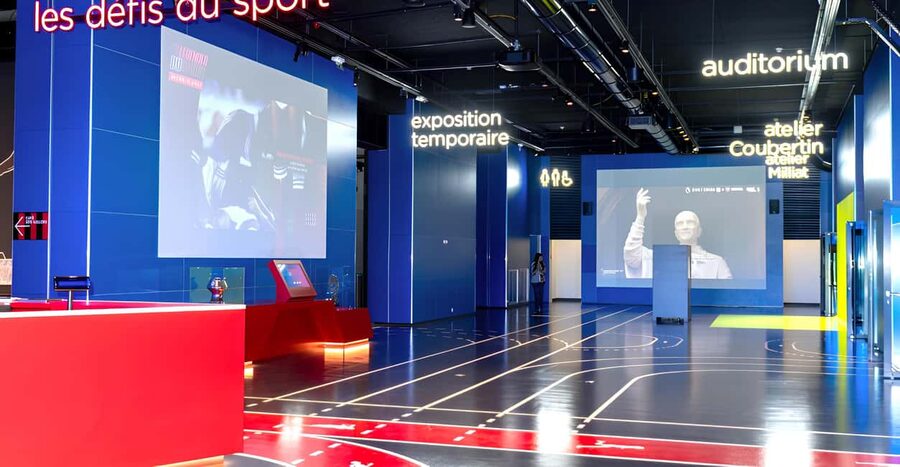
The third stage focuses on collective challenge, with football, rugby, handball, volleyball, and basketball. Team sports change the story again. One person may score, but the result depends on passing, positioning, trust, and shared plans.
I like this section because it places popular sports alongside one another without treating any single game as the whole story. Football fans will find familiar material, but the broader selection gives you a better sense of how different team sports solve similar problems.
The displays also help explain why sport matters socially. Team games create local loyalties, national identities, rituals, and strong memories. The museum’s purpose is not simply to preserve trophies. It is to show how sporting events become part of public life.
The fourth stage turns to challenges beyond normal limits. Extreme climbing, solo sailing, and conquering the skies shift attention toward risk, endurance, isolation, and technical skill.
These exhibits may be the most visually dramatic part of the visit, but they also need a little patience. A mountaineering or sailing object can look ordinary until you understand the conditions in which it was used. Take time to read the explanations rather than rushing from one large item to the next.
Seeing every Olympic torch
The Olympic torches are one of the clearest reasons to book this museum. Seeing them together lets you compare the design, size, and character of different Games in a way that a single Olympic display cannot.
The torches also carry a useful lesson about sporting memory. Each one links an athletic event to its host city, its era, and the way that Games wanted to present itself. You can look at them as objects of design, but also as markers of changing Olympic culture.
For many people, this will be the strongest visual feature of the museum. If you are planning a quick visit, make the torches a priority rather than assuming you will circle back at the end.
They are especially useful for children, who may respond more easily to a line of distinctive objects than to a long text panel. Ask them to compare shapes and materials, then connect the torches to the larger story of international sport.
A self-guided visit with room to set your own pace
Your admission is valid for one day, and you are free to spend as much time inside as you like. The museum does not include a guide, so you will be responsible for choosing the order and speed of your visit.
That arrangement suits me for a museum like this. You can pause at displays that match your interests and move quickly through sports that do not hold your attention. A serious sports fan might want to read nearly everything, while a family can keep the visit shorter and more active.
A practical target is around two hours. One family found that amount of time worthwhile, but the exact length depends on how closely you read the displays and whether a temporary exhibition is open. Do not treat two hours as a fixed timetable. The one-day admission gives you flexibility.
The lack of a guide is also the main limitation. If you want a personal explanation of the objects, a lively narrative, or someone to answer questions as you go, this ticket will not provide that. You are buying entry and independence, not a guided tour.
More of Nice:
- From Nice: Eze, Monaco, & Monte-Carlo Half-Day Trip
★ 4.5 · 5,642 reviews - From Nice: French Riviera in One Day
★ 4.5 · 5,215 reviews - Nice: 1-Hour Sightseeing Cruise to Villefranche Bay
★ 4.6 · 2,747 reviews - Nice: 1 or 2-Day Hop-On Hop-Off Bus Tour
★ 4.3 · 2,663 reviews
Temporary exhibitions add a second layer

More than 500 square meters are reserved for temporary exhibitions. These shows focus on a particular subject or a current issue, so the museum can change its emphasis over time.
That makes the experience less predictable from one visit to the next. A temporary show may give you a sharper look at one sport, athlete, event, or social question than the permanent collection can provide.
The useful advice is simple: check the museum’s current exhibition before you book. The temporary galleries may be the deciding factor for a return visit, but the subject is not specified in the ticket information and can change.
You should also allow extra time if a temporary exhibition interests you. The permanent visit already covers four large themes, and adding another 500 square meters can turn a quick stop into a substantial museum outing.
Is $9 good value?
At about $9 per person, the ticket is reasonably priced for a museum that can occupy roughly two hours and may keep you longer if you read carefully. You also get access to the permanent museum and its temporary exhibition areas without paying for a guide.
The value improves considerably if you qualify for free admission. Children under 18, people with disabilities, Pass Education holders, unemployed people, ICOM members, and journalists are listed as eligible for free entry. Admission is also free for everyone during the Night of Museums, Heritage Days, and the first Sunday of each month from October through March.
That last option can make the museum especially attractive during a longer stay in France. Check the date and opening details before planning around it, since the free-admission periods are specific.
For adults paying the standard rate, this is not a bargain only because it is cheap. The price works because you can stay for the day, explore without a guide, and choose how much of the collection you want to absorb.
The value is weaker if you expect a major stadium experience. One booking option was paired with a stadium tour in French and English, and that combination may appeal to you if you want both the museum and the sporting venue. Since meeting points can vary by option, read the exact choice carefully before paying.
Families, access, and small practical rules
The museum is described as wheelchair accessible, and a family visit found it suitable for people with limited mobility. That makes it a useful choice when your group needs an indoor activity with fewer physical demands than a long city walk.
The displays are also described as child-friendly. The interactive presentation and wide range of sports give children several ways into the subject, even if they are not interested in every exhibit.
Food, drinks, and flash photography are not allowed inside. Plan to eat before or after your visit and use normal photography settings if you take pictures.
A small shop sells drinks, according to one booking experience, and free parking is available directly in front of the museum. Those details can make the visit easier if you are arriving by car, though you should still confirm current arrangements before setting your day around them.
The museum is not presented as a guided tour. If your group includes children, it helps to set a simple challenge of your own: find the Olympic torches, choose one personal sport, one team sport, and one extreme sport, then compare them.
What can disappoint you
The museum’s strength is its range, but range can also create a problem. With so many sports and themes, some displays may feel abstract or less immediately exciting than a real match, stadium, or hands-on sports center.
One booking experience found the museum less satisfying and felt that the stadium tour was the better part. That is useful warning for anyone who has only a short afternoon and wants a strong visual spectacle.
Opening hours also matter. A visit that ends earlier than expected can disrupt a packed sightseeing plan, so check the current schedule before you arrive. The ticket is valid for one day, but that does not mean the museum is open all day.
If you are mainly interested in one club, one athlete, or one Olympic Games, you may find the collection too broad. If you enjoy connections between sports, society, design, and memory, the wide scope is more likely to work in your favor.
Who should book this museum?
I would recommend it most strongly to families, sports fans, museum lovers, and anyone looking for a calm indoor stop with a clear structure. It is also a good match for people who prefer self-guided visits and do not want to follow a fixed group.
You will get the most from it if you give yourself time to read, compare sports, and think about how athletic contests affect society. The museum is not only a hall of famous objects. It asks you to consider effort, rules, teamwork, risk, and public memory.
The ticket also makes sense for a mixed group. One person can focus on Olympic objects, another on football or rugby, and a child can follow the interactive elements. Nobody has to share exactly the same interest.
I would be more cautious if your priority is a stadium tour, a short stop packed with spectacle, or a live sporting atmosphere. In that case, choose a booking option that clearly includes the stadium visit, or make the museum part of a wider sports-themed day.
Should you book the Musée National du Sport?
Book it if you want a broad, accessible museum visit with Olympic torches, four well-defined sporting themes, and the freedom to explore without a guide. At about $9, the price is fair, and it becomes particularly good value for families or anyone who qualifies for free admission.
Before booking, check the current temporary exhibition, opening hours, and the exact option if you want a stadium tour. If you have around two hours and enjoy sport as part of culture and daily life, this is a sensible stop. If you want only a stadium spectacle, choose carefully so the museum does not carry expectations it was not designed to meet.
FAQ
How much does admission to the Musée National du Sport cost?
The listed price is $9 per person.
How long is the ticket valid?
The ticket is valid for one day.
Is the visit guided?
No. This is a self-guided museum visit, and a guide is not included.
Can I explore the museum at my own pace?
Yes. You can spend as much time as you like inside during the ticket’s one-day validity.
What are the main sections of the museum?
The visit is arranged around personal challenge, one-on-one challenge, collective challenge, and challenges beyond the limits.
Can I see Olympic torches?
Yes. The museum displays all the Olympic torches.
Are temporary exhibitions included?
The museum includes temporary exhibition areas covering more than 500 square meters. The subject shown can change, so check the museum website for current information.
Is the museum wheelchair accessible?
Yes. The activity is listed as wheelchair accessible.
Who can enter free of charge?
Children under 18, disabled persons, Pass Education holders, unemployed persons, ICOM members, and journalists can enter free. Admission is also free for everyone during the Night of Museums, Heritage Days, and the first Sunday of each month from October through March.
Can I bring food or drinks inside?
No. Food and drinks are not allowed inside, and flash photography is also prohibited.
Just added around Nice
- Cannes Large Group Shore Excursion with a Minibus 15 seater★ 5.0 · 3 reviews
- Transfer from Antibes to Nice Airport★ 5.0 · 3 reviews
- Private excursion from Villefranche in Citroën Méhari to Eze and Monaco★ 5.0 · 3 reviews
- Private Tour of Juan les Pins by Ferrari★ 4.5 · 3 reviews
- Private Tour from Saint-Tropez to the flowers city★ 5.0 · 3 reviews
- Horse riding in the vineyards of Grimaud + wine tasting★ 5.0 · 3 reviews
- 2-Hour Paddle Boarding Tour in Villefranche★ 4.9 · 3 reviews
- Private Professional Vacation Photoshoot in Nice★ 5.0 · 3 reviews
Nice Tours, compared.

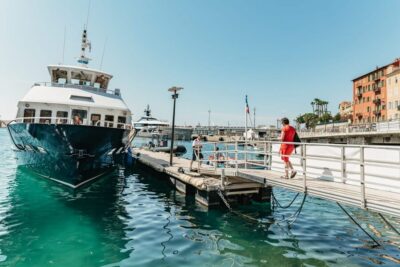
1-Hour Sightseeing Cruise to Villefranche Bay
Read our review →

Gorges of Verdon and Fields of Lavender Tour
Read our review →
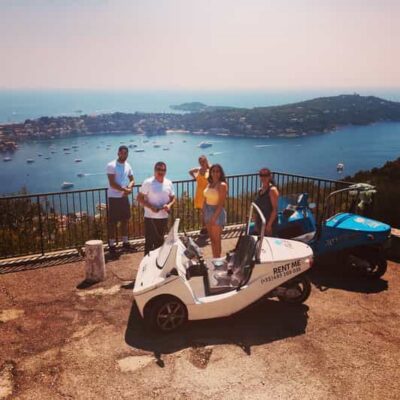
Exclusive Guided Tour in a One-of-a-Kind Electric Car
Read our review →